Are these real clients?
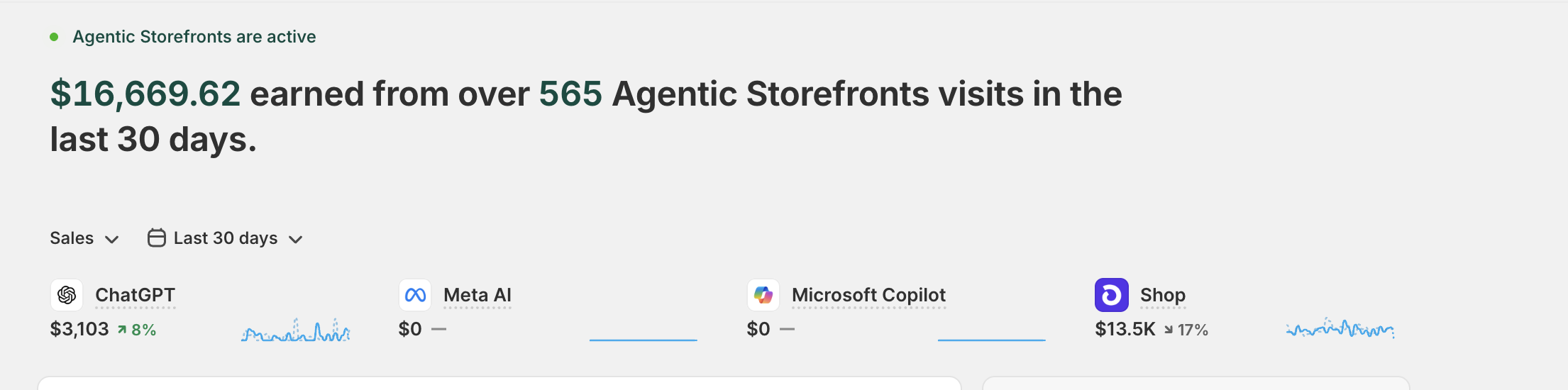
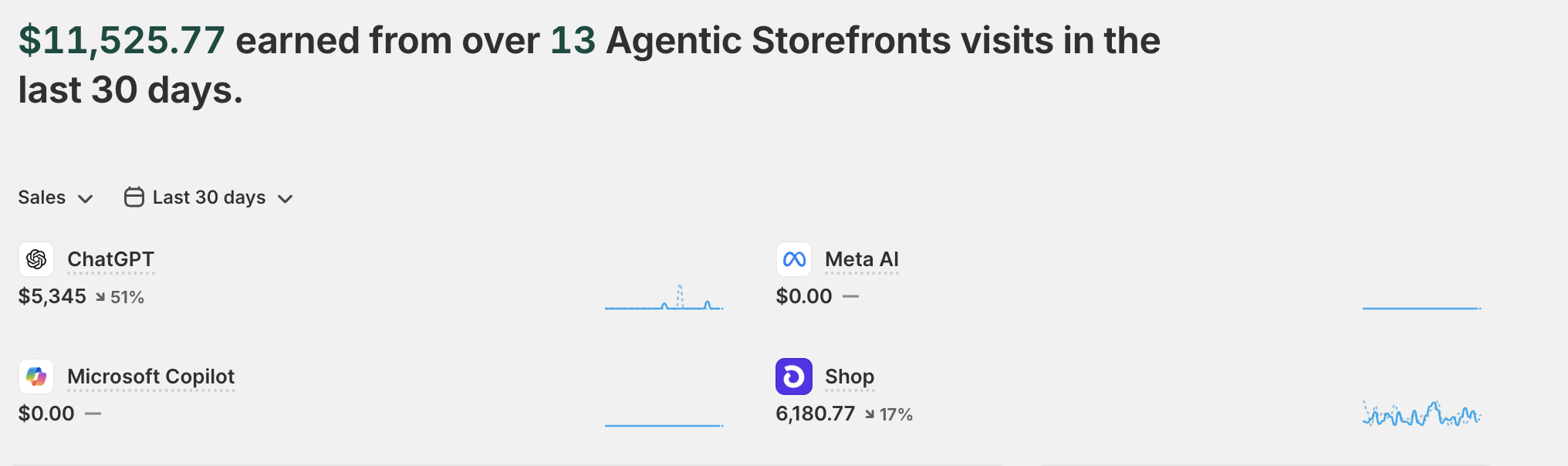
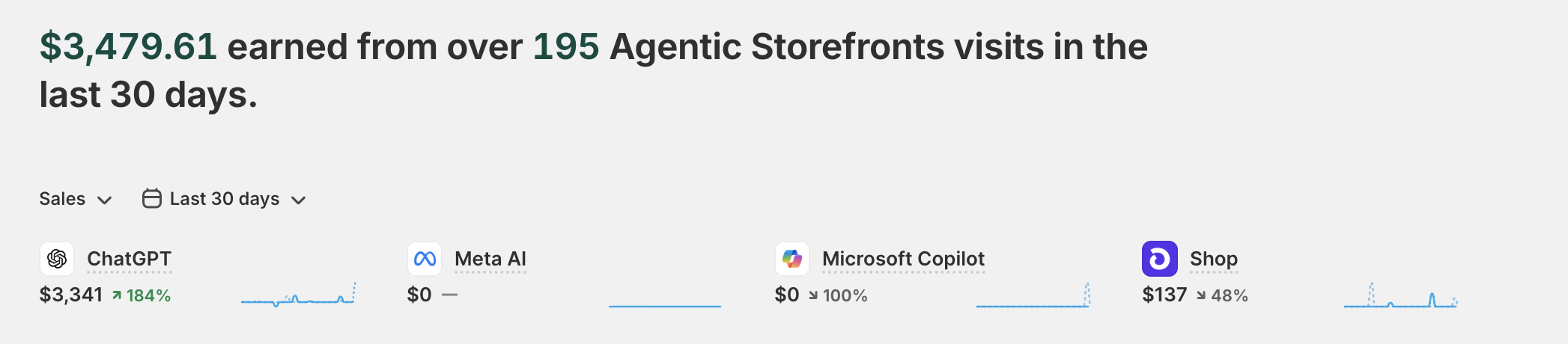
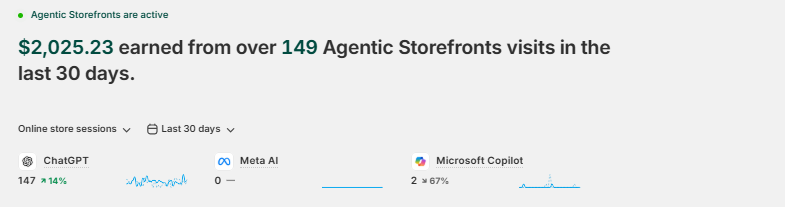
−Yes. Every screenshot is an unedited export from a live client account — Shopify admin, GA4, and our mention-tracking platform. We anonymize by industry because client agreements restrict naming stores publicly, but the dashboards are shown exactly as captured. On an audit call we can walk through equivalent reports live.
Is this just traffic that would have come anyway?
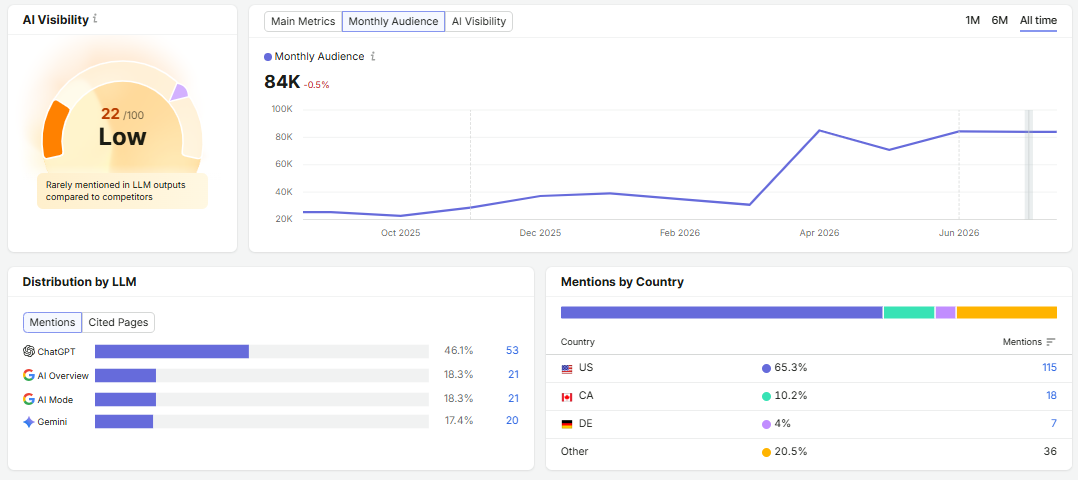
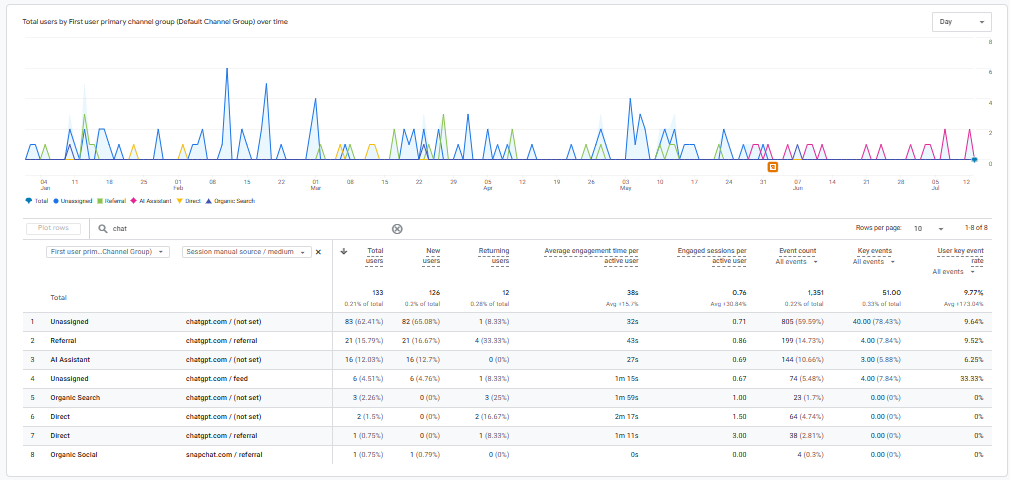
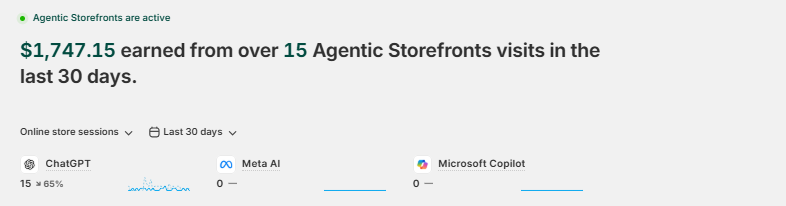
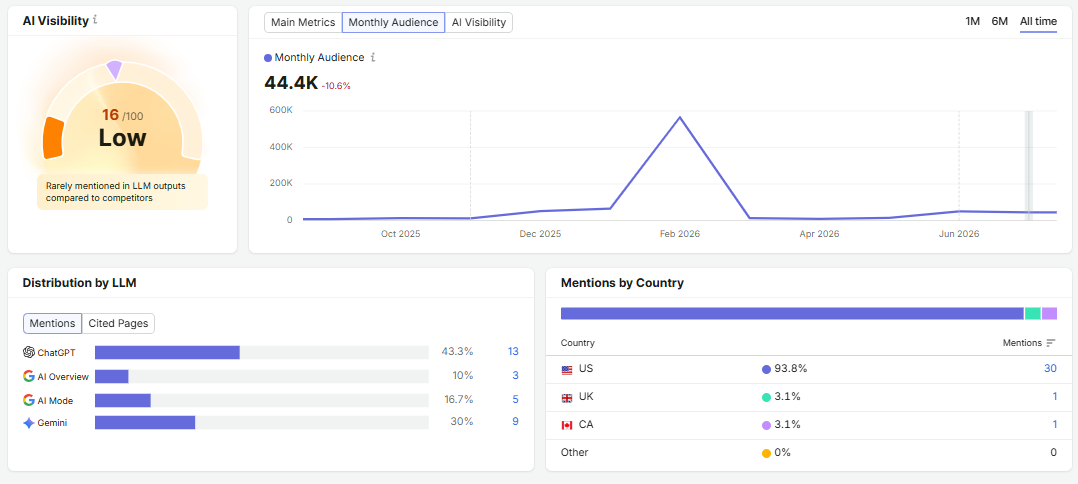
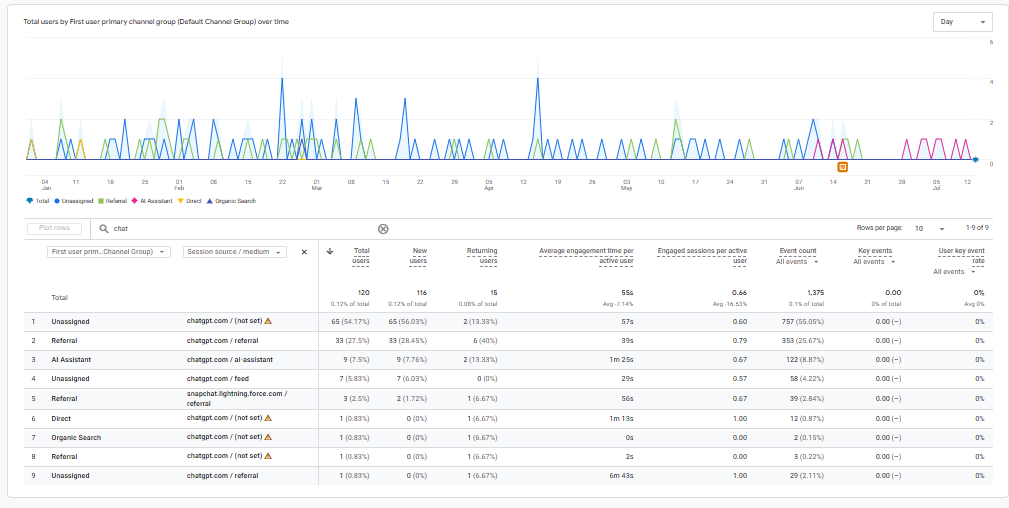
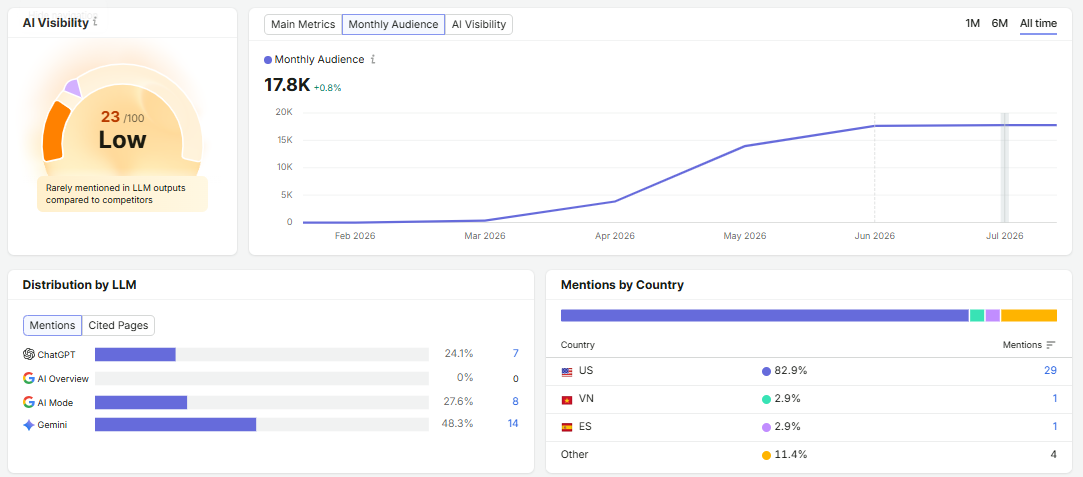
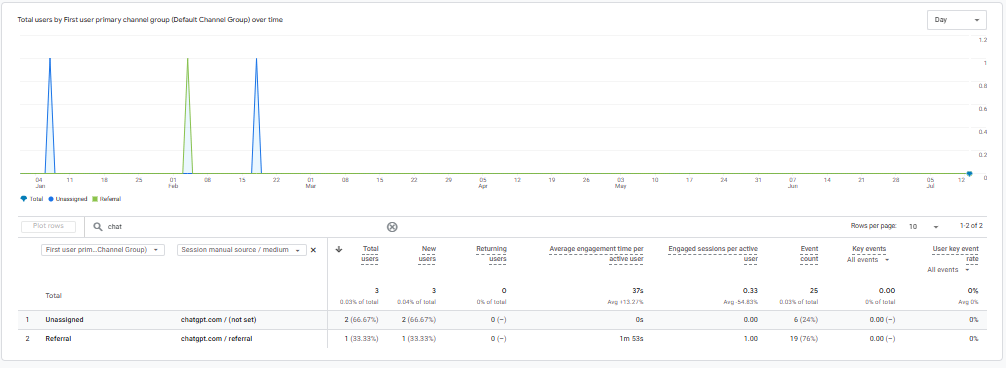
+The baselines say no. Case 3 started at literal zero — no mentions, no citations, no assistant referrals — and the audience chart shows the inflection after work began. In Cases 1 and 2, chatgpt.com wasn't a named referral source in GA4 before the engagement. Agentic Storefront revenue is a channel that didn't exist for these stores at all.
How is attribution actually measured?
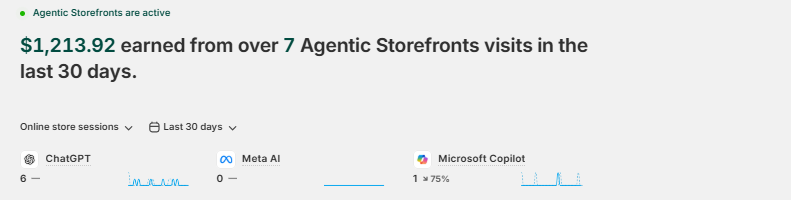
+Three independent systems: Shopify's own Agentic Storefront reporting (visits and revenue from AI purchasing agents), GA4 source attribution (sessions and key events from chatgpt.com, perplexity.ai, copilot.microsoft.com), and monthly mention tracking against a fixed prompt set. We never rely on a single self-reported metric.
Why are the clients anonymized?
+Competitive protection. AI visibility is winner-take-most — clients who hold top recommendation slots don't want competitors reverse-engineering their category or prompts. Industry, platform, timeline, and every number stay real.
The dollar figures look small. Why show them?
+Because they're early-channel numbers, and honest ones. Agentic checkout launched recently — $116–$173 revenue per AI-referred visit at this stage is the signal that matters. Compare that to typical paid-traffic revenue per session, then consider what happens as AI shopping volume compounds.